Small vs. Large Assisted Living: Why Intimate Settings Support Much Better ADLs
Business Name: BeeHive Homes of Bernalillo
Address: 200 Sheriff's Posse Rd, Bernalillo, NM 87004
Phone: (505) 221-6400
BeeHive Homes of Bernalillo
Beehive Homes assisted living care is ideal for those who value their independence but require help with some of the activities of daily living. Residents enjoy 24-hour support, private bedrooms with baths, medication monitoring, home-cooked meals, housekeeping and laundry services, social activities and outings, and daily physical and mental exercise opportunities. Beehive Homes memory care services accommodates the growing number of seniors affected by memory loss and dementia. Beehive Homes offers respite (short-term) care for your loved one should the need arise. Whether help is needed after a surgery or illness, for vacation coverage, or just a break from the routine, respite care provides you peace of mind for any length of stay.
200 Sheriff's Posse Rd, Bernalillo, NM 87004
Business Hours
Choosing an assisted living community is rarely simply a housing decision. For a lot of families, it is a turning point in a loved one's daily life, specifically around the most individual regimens: getting dressed, bathing, handling medications, and simply obtaining from bed to chair without a fall. Those Activities of Daily Living, or ADLs, are precisely where small, intimate assisted living settings typically outshine large, campus-style communities.
I have visited, evaluated, and assisted location senior citizens in both types of settings for many years. The pattern corresponds. Large structures offer appealing amenities and hectic calendars. Small homes tend to offer more trustworthy, more individualized aid with the fundamentals that truly keep someone safe and dignified. The differences are subtle on a brochure, and striking in genuine life.
This article looks carefully at why that takes place, how to choose what your loved one actually requires, and where big communities still have an edge. The objective is not to declare a universal winner, but to match environment to individual, particularly around ADLs and hands-on elderly care.
What ADLs Actually Mean in Daily Life
Professionals utilize "ADLs" constantly, so households often nod along without fully envisioning what is consisted of. For positioning choices, it deserves slowing down and translating jargon into lived moments.
ADLs typically include bathing or bathing, dressing, grooming, toileting, moving (for instance, bed to chair), and consuming. Sometimes strolling or using a mobility device is contributed to the list. On paper, it seems like a list. In real life, each ADL has layers.
Bathing is not simply stepping into a shower. It is getting somebody to consent to bathe, adjusting water temperature level, supporting a weak knee, washing hair thoroughly, and making sure they are completely dried to avoid skin breakdown. If your mother has dementia and dislikes water on her face, a rushed bath can seem like an assault. A calm, familiar caregiver who knows how to talk her through it can turn a dreaded ordeal into a bearable routine.
Dressing can be the trigger for agitation if someone is pressed to rush, or it can be a chance for discussion and orientation. Moving safely requires both enough personnel and the best technique, or the danger of falls increases quick. Toileting assistance is deeply intimate and strongly connected to self-respect. Small breakdowns in any of these locations tend to snowball: avoided baths, bad hygiene, and an increased threat of urinary tract infections, falls, and hospitalizations.
Because ADLs are so relational, the staff-to-resident ratio, the rate of the environment, and the consistency of caregivers matter as much as any formal care plan. This is where size enters into play.
How Size Shapes Care: The Structural Differences
When households compare communities, they typically look first at cost, place, and appearance. Size hides in the background up until you link it to what the day in fact looks like for a resident.
Large assisted living communities typically have lots, sometimes hundreds, of citizens. Wings or floorings might be divided by level of care, memory care, or independent living. The structure often feels like a hotel, with a front desk, business kitchen area, and official dining-room. Staffing is set up in blocks: day shift, night, over night. Ratios can differ widely, however many big residential or commercial properties hover around one direct care staff member for 8 to 15 citizens throughout the day, with fewer at night.
Smaller settings can suggest different designs. Some are "residential care homes" or "board and care" homes, typically in a transformed home with 6 to 12 homeowners. Others are small lodges or cottages with 10 to 20 citizens organized together. Staffing is generally more flexible and less layered. You might see one caregiver for 3 to 6 residents during the day, plus a med tech or nurse who likewise understands each resident personally.
From the outdoors, a large structure may feel more remarkable. Inside, size rapidly impacts three things: the time a caretaker can spend with everyone, how well personnel understand specific histories and routines, and how quickly somebody responds when a resident requirements assist with an ADL. For senior citizens who still handle nearly whatever on their own, the difference may feel small. For those needing hands-on assisted living assistance multiple times a day, it becomes central.
Why Intimate Settings Tend to Assistance ADLs Better
Over time, I have actually seen small neighborhoods surpass bigger ones on ADL outcomes for three primary reasons: continuity of relationships, slower speed, and less handoffs.
In a small home, the personnel typically understand each resident's morning rhythm. They bear in mind that Mr. Carter needs 10 minutes to "heat up" before he can pivot securely out of bed, or that Mrs. Lee prefers to bathe every other night after her favorite program. That understanding is not simply composed in a chart. It lives in the staff because they perform the very same ADLs with the same people day after day.
In big structures, staffing lineups frequently alter more regularly. A resident may see 3 various care assistants within two days, specifically across shift modifications. Each aide suggests well, however they might not know that your father tends to get orthostatic lightheadedness when he stands too fast, or that your mother needs a calm, repeated hint to sit fully back before a transfer. That lack of familiarity shows up in hurried showers, half-finished grooming, and a tendency to back off when a resident withstands, simply due to the fact that the caregiver can not invest the additional 15 minutes it would take to develop trust.
The physical design matters too. In a 120-bed neighborhood, a caregiver might be responsible for two corridors and senior living spend half their time strolling from room to space. If your parent rings for help getting to the toilet, personnel may be 6 rooms away handling another resident's fall. Even a five to ten minute hold-up can be the difference between safe toileting and an incontinent episode that undermines dignity and increases skin risk.
In a 10-resident home, caretakers are rarely more than a few steps away. They can hear somebody approaching the bathroom, or notice that Mr. Johnson did not come out for breakfast and go check. Numerous ADLs are attended to preemptively, since staff see and respond to subtle modifications before they end up being crises.
A Day in the Life: Big vs. Small, Through ADL Lenses
Imagining a day can clarify the compromises better than any abstract chart.
Picture a large assisted living community. Breakfast is served from 7:30 to 9:00 in the main dining-room. Transit time from a resident space might be a long hallway plus an elevator ride. One caregiver on the wing has 8 residents requiring some level of help up and down. The early morning rapidly becomes a rush. Homeowners who stroll individually go first. Those who require aid dressing and transferring might not reach the dining room until 8:45 or later on. Personnel do their best, however a resident who is slow or resistant may have their bath "pressed" to the afternoon, then to another day.
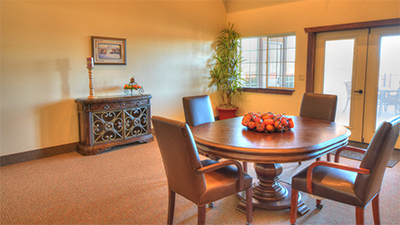
Now photo a small residential care home with 8 citizens. Early morning is still a hectic time, but the environment is quieter and more flexible. Breakfast is often served at a family-style table near the bedrooms, and caregivers can serve residents in pajamas if needed, then assist them gown afterward. The staff are hardly ever more than a space away when a resident calls. ADL assistance ends up being a series of small, constant interactions rather of a scramble to hit scheduled tasks.
I have actually seen homeowners who were labeled "resistant to care" in big settings move into small homes and accept bathing and dressing help with minimal protest. The behavior did not alter because of a behavior strategy in some abstract sense. It changed due to the fact that staff had time to technique slowly, usage familiar language, change regimens, and develop trust.
Staff Ratios, Training, and Real-World Care
Families often ask for personnel ratios as if a number alone will tell the story. Numbers matter a good deal, however context identifies what they in fact mean.
In a small home with 6 citizens and 2 caretakers on daytime shift, each caretaker has time to completely help 3 people with morning ADLs, help with meal preparation, and still react to unscheduled needs. If one resident has a particularly difficult morning, the other caretaker can cover. Homeowners see the same familiar faces, which supports those with dementia or anxiety.
In a big structure with 60 citizens on a flooring and 4 caretakers, the ratio on paper might appear comparable, but the work is more segmented. One person might deal with all showers, another might pass medications, another may be accountable for two hallways of call lights and standard ADLs. Training can be standardized and in some cases more substantial, which is a real advantage. Nevertheless, when the environment is busy and task-driven, staff might default to "get it done" rather of "do it in the way best fit to this person."
From a senior care viewpoint, training and guidance often look much better on paper in big neighborhoods. There is normally a nurse on site, official in-service training, and corporate policies. Small homes differ extensively. Some are excellent, with experienced caregivers and strong nurse oversight. Others may be thin on formal training, relying more on veteran personnel who "just know" how to take care of residents.
For hands-on ADLs, though, the easy question is: does my loved one get the time, repetition, and consistency needed to keep doing as much as possible for themselves, with assistance where required? Intimate settings tend to win on that, especially for seniors who have a mix of physical and cognitive needs.
When a Big Community Might Be the Better Fit
It would be misguiding to say small is always better for each older adult. There specify scenarios where a larger assisted living community has clear benefits, even for locals with ADL needs.
Some senior citizens genuinely prosper on variety, social energy, and structured activities. A retired instructor or executive who still enjoys lectures, trips, and several clubs may feel restricted in a small home with just a couple of fellow citizens. Even if they require help bathing and dressing, the overall quality of life might be greater in a large, active setting.
Medical intricacy is another element. While assisted living is not the like skilled nursing, larger communities regularly have 24/7 nurse presence, on-site rehab, or close relationships with going to physicians and therapists. For a resident with frequent medication changes, fragile diabetes, or a brand-new stroke, that clinical facilities can be valuable. In those cases, you may accept some compromises on one-to-one ADL time in exchange for much better monitoring and rapid response.
Cost and schedule also matter. In some areas, there are much more big communities than small homes, or the small homes have actually restricted openings. Families often use large neighborhoods as a kind of respite care, providing a short-term break to caretakers while a loved one recuperates from a disease or while everybody assesses longer-term options. For a prepared short stay, the richness of facilities in a bigger setting might balance out the risks of a less individualized ADL approach.
The secret is to be truthful about your loved one's priorities. If they primarily need friendship, light assistance, and take pleasure in busy environments, a large community can be a terrific fit. If they are modest, easily overwhelmed, or require frequent, hands-on assist with every ADL, a smaller setting normally serves them better.
The Function of Intimacy in Dementia and ADLs
Dementia makes complex every ADL. It impacts memory, sequencing, spatial awareness, language, and emotional guideline. A lot of the most challenging habits households report - declining showers, starting out during toileting, pacing all night - arise from anxiety and confusion, not stubbornness.
In a large, unknown building, somebody with dementia can feel lost multiple times a day. They might forget where the restroom is, misinterpret strangers walking down the hallway, or feel rushed by personnel who are trying to keep to a schedule. That stress and anxiety appears as resistance to care. Staff may describe the person as "challenging", when in truth the environment is just too stimulating and impersonal.
An intimate assisted living or small memory care home shortens the ranges and increases predictability. Residents see the very same caretakers, the exact same kitchen area, the same view out the window every morning. Caretakers can utilize constant scripts and routines: the exact same joke before showers, the very same warm washcloth to begin face washing. Gradually, this familiarity reduces resistance and makes it possible to keep ADLs longer, even as cognitive decline progresses.
I remember a resident who had been declining showers in a larger memory care system for weeks. She clenched her fists, screamed, and attempted to strike staff. Household were told she "simply does not like baths any longer." When she moved into a 10-bed home, the caregiver noticed that she relaxed whenever somebody hummed a particular hymn. They constructed a pre-shower routine around that song, redirected her to a portable shower she could see and manage, and enabled her to hold a towel across her chest. Within 2 weeks, she was bathing regularly again. Absolutely nothing in her brain altered. The environment and the method did.
For families navigating dementia, this is the heart of the small versus large concern. Intimacy and repeating are not just "great to have" qualities. They are tools that directly support ADLs.
Practical Distinctions Families Will Notice
When you tour neighborhoods, some of the most telling ideas are not in the sales brochure copy, however in the small interactions you witness. In a small home, you will frequently see caregivers and citizens moving in and out of the cooking area together, sharing small talk, and beginning ADLs naturally. A resident might be assisted to clean up at the sink before breakfast, with a caretaker handing them a warm fabric and guiding each step.
In a big building, ADLs are regularly set up and segmented. Showers might be "Monday, Wednesday, Friday at 10:30," and if your mother refused at 10:35, she may not get another attempt till the next scheduled day. Meals are at set times, and late sleepers may get "room trays" if they miss the window, frequently without the exact same level of social engagement or help with eating.
Noise level, lighting, and room design matter for ADL success. Small homes tend to feel domestically familiar, which minimizes anxiety for many senior citizens. Intense overhead lights and long corridors can be disorienting, particularly for those with bad vision or cognitive decrease. In a small setting, staff can more easily customize the environment. They might lower the lights during evening care, play soft music during bathing times, or keep adaptive devices within reach.
Families likewise notice how quickly patterns are gotten. In small settings, if your father fights with buttons, somebody will probably suggest pull-over shirts by the second or 3rd day, and you will see that shown in how they assist him dress. In a large setting, the exact same observation may be buried amidst numerous citizens' requirements, unless you or a strong supporter presses it into the written care strategy and follows up.
A Simple Contrast Checklist for ADL Support
When you tour or assess options, it helps to have a concentrated lens on ADLs, not simply visual appeal or activity calendars. Utilize this brief checklist to compare how small and large settings might feel for your loved one:
- Ask staff to explain a typical early morning for a resident who requires aid with bathing, dressing, and toileting. Listen for just how much time they enable, and whether the regular noises rushed or versatile.
- Observe how personnel address locals in passing. Do they use names, touch, and eye contact, or are they primarily task focused and in a rush between spaces?
- Check how far rooms are from bathrooms and dining locations. Imagine your loved one making that trip three or four times a day.
- Ask how they adapt regimens for someone who refuses or fears bathing. Search for particular, concrete examples, not vague peace of minds.
- Inquire about staff continuity. Do the same caretakers usually care for the very same residents, or do projects alter frequently?
You are listening less for polished responses and more for consistency, information, and signs that staff truly know their homeowners as individuals.
The Role of Respite Care in Testing Fit
One underused strategy for families is to treat respite care as a trial run. Numerous assisted living neighborhoods, both large and small, offer brief stays ranging from a couple of days to a couple of weeks. Throughout that time, your loved one lives in the community as a temporary resident, getting the very same senior care and elderly care services as long-lasting residents.
For ADLs, respite stays are extremely revealing. You will see how rapidly personnel discover your parent's regimens, how often call lights are addressed, whether clothing are put away effectively, and if hygiene and grooming appearance preserved. Families often find that the excellent big neighborhood struggles to handle specific behaviors or ADL tasks, while an easy small home manages them smoothly. Other times, the reverse happens, particularly if your loved one is more social and independent than you realized.
Respite care likewise offers your parent a voice. Even an individual with moderate cognitive decrease can often tell you whether they feel cared for, hurried, lonesome, or safe. Take note of whether they talk about "the people" by name in a small home, versus "the place" or "the building" in a bigger one. That emotional connection usually correlates strongly with ADL success.
Balancing Dignity, Safety, and Independence
At the heart of all these decisions is a balancing act: self-respect, security, and self-reliance. Small, intimate assisted living settings tend to secure dignity and security by closely supporting ADLs and reducing the possibility of lapses. They likewise, when done well, assistance independence by giving locals just enough assist, not too much.
An excellent caretaker in a small home will know that Mrs. Daniels can still brush her teeth independently if somebody merely sets out the toothbrush and hints her to begin. In a busier environment, that exact same resident might have her teeth brushed for her because staff are pushed for time. Over weeks and months, that difference speeds up decline.
Large neighborhoods, when genuinely well staffed and well led, can absolutely keep strong ADL assistance. Some achieve this by producing small "communities" within a bigger campus, limiting each caregiver's location and motivating relationship-based care. Others invest in innovative training in dementia care techniques and hire sufficient staff to avoid persistent hurrying. These models sit closer to the "finest of both worlds," however they tend to be at the greater end of the expense spectrum.
In the end, your option will rarely be about perfection. It will be about trade-offs. Facilities versus intimacy. Range versus predictability. On-site services versus everyday one-to-one time. For older adults who need constant, hands-on aid with bathing, dressing, toileting, and movement, smaller, more intimate settings frequently tip the scales, since they transform staff hours into genuine, tailored care.
Questions to Ask Yourself Before Deciding
As you weigh alternatives, it helps to go back from marketing language and ask yourself a few grounded questions about ADL assistance:
- Which environment will enable personnel to genuinely know my loved one's practices, worries, and choices around bathing, dressing, and toileting?
- If something goes wrong - a fall, a refusal to shower, a bout of confusion - where are personnel most likely to have time to problem-solve instead of default to crisis mode?
- Does my loved one gain more from everyday social range or from predictable, familiar faces assisting them through vulnerable tasks?
- How much am I depending on amenities to make me feel much better versus what my loved one actually utilizes and takes pleasure in?
- Could a brief respite care remain in one or two settings assist us see which environment better supports ADLs in practice?
Clear answers to these questions usually point strongly towards either a small or large setting as the much better very first choice.
The decision about assisted living placement is one of the most individual in senior care. By focusing on how each environment truly manages ADLs, instead of only on appearances or activity calendars, you give your loved one the best chance at a life that feels safe, respectful, and as independent as possible.
BeeHive Homes of Bernalillo provides assisted living care
BeeHive Homes of Bernalillo provides memory care services
BeeHive Homes of Bernalillo provides respite care services
BeeHive Homes of Bernalillo supports assistance with bathing and grooming
BeeHive Homes of Bernalillo offers private bedrooms with private bathrooms
BeeHive Homes of Bernalillo provides medication monitoring and documentation
BeeHive Homes of Bernalillo serves dietitian-approved meals
BeeHive Homes of Bernalillo provides housekeeping services
BeeHive Homes of Bernalillo provides laundry services
BeeHive Homes of Bernalillo offers community dining and social engagement activities
BeeHive Homes of Bernalillo features life enrichment activities
BeeHive Homes of Bernalillo supports personal care assistance during meals and daily routines
BeeHive Homes of Bernalillo promotes frequent physical and mental exercise opportunities
BeeHive Homes of Bernalillo provides a home-like residential environment
BeeHive Homes of Bernalillo creates customized care plans as residents’ needs change
BeeHive Homes of Bernalillo assesses individual resident care needs
BeeHive Homes of Bernalillo accepts private pay and long-term care insurance
BeeHive Homes of Bernalillo assists qualified veterans with Aid and Attendance benefits
BeeHive Homes of Bernalillo encourages meaningful resident-to-staff relationships
BeeHive Homes of Bernalillo delivers compassionate, attentive senior care focused on dignity and comfort
BeeHive Homes of Bernalillo has a phone number of (505) 221-6400
BeeHive Homes of Bernalillo has an address of 200 Sheriff's Posse Rd, Bernalillo, NM 87004
BeeHive Homes of Bernalillo has a website https://beehivehomes.com/locations/bernalillo/
BeeHive Homes of Bernalillo has Google Maps listing https://maps.app.goo.gl/QSaz3dwMGDj1Ev9a8
BeeHive Homes of Bernalillo has Instagram page https://www.instagram.com/beehivehomesbernalillo/
BeeHive Homes of Bernalillo has an YouTube page https://www.youtube.com/@WelcomeHomeBeeHiveHomes
BeeHive Homes of Bernalillo won Top Assisted Living Homes 2025
BeeHive Homes of Bernalillo earned Best Customer Service Award 2024
BeeHive Homes of Bernalillo placed 1st for Senior Living Communities 2025
People Also Ask about BeeHive Homes of Bernalillo
What is BeeHive Homes of Bernalillo Living monthly room rate?
The rate depends on the level of care that is needed. We do a pre-admission evaluation for each resident to determine the level of care needed. The monthly rate is based on this evaluation. There are no hidden costs or fees
Can residents stay in BeeHive Homes until the end of their life?
Usually yes. There are exceptions, such as when there are safety issues with the resident, or they need 24 hour skilled nursing services
Do we have a nurse on staff?
No, but each BeeHive Home has a consulting Nurse available 24 – 7. if nursing services are needed, a doctor can order home health to come into the home
What are BeeHive Homes’ visiting hours?
Visiting hours are adjusted to accommodate the families and the resident’s needs… just not too early or too late
Do we have couple’s rooms available?
Yes, each home has rooms designed to accommodate couples. Please ask about the availability of these rooms
Where is BeeHive Homes of Bernalillo located?
BeeHive Homes of Bernalillo is conveniently located at 200 Sheriff's Posse Rd, Bernalillo, NM 87004. You can easily find directions on Google Maps or call at (505) 221-6400 Monday through Sunday 9:00am to 5:00pm
How can I contact BeeHive Homes of Bernalillo?
You can contact BeeHive Homes of Bernalillo by phone at: (505) 221-6400, visit their website at https://beehivehomes.com/locations/bernalillo/ or connect on social media via Instagram Facebook or YouTube
You might take a short drive to the Range Café Bernalillo. Range Café Bernalillo provides a relaxed dining atmosphere where residents in assisted living, memory care, senior care, elderly care, and respite care can enjoy regional cuisine with family.